Maldives Travel Guide 2026: Entry, Island Life & Legal Essentials
Beyond the Blue: The Ultimate Guide to Navigating the Maldives
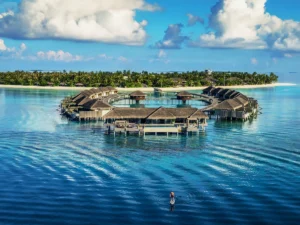
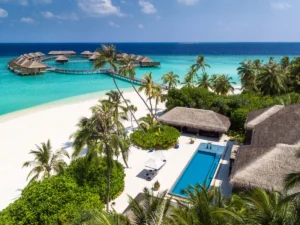
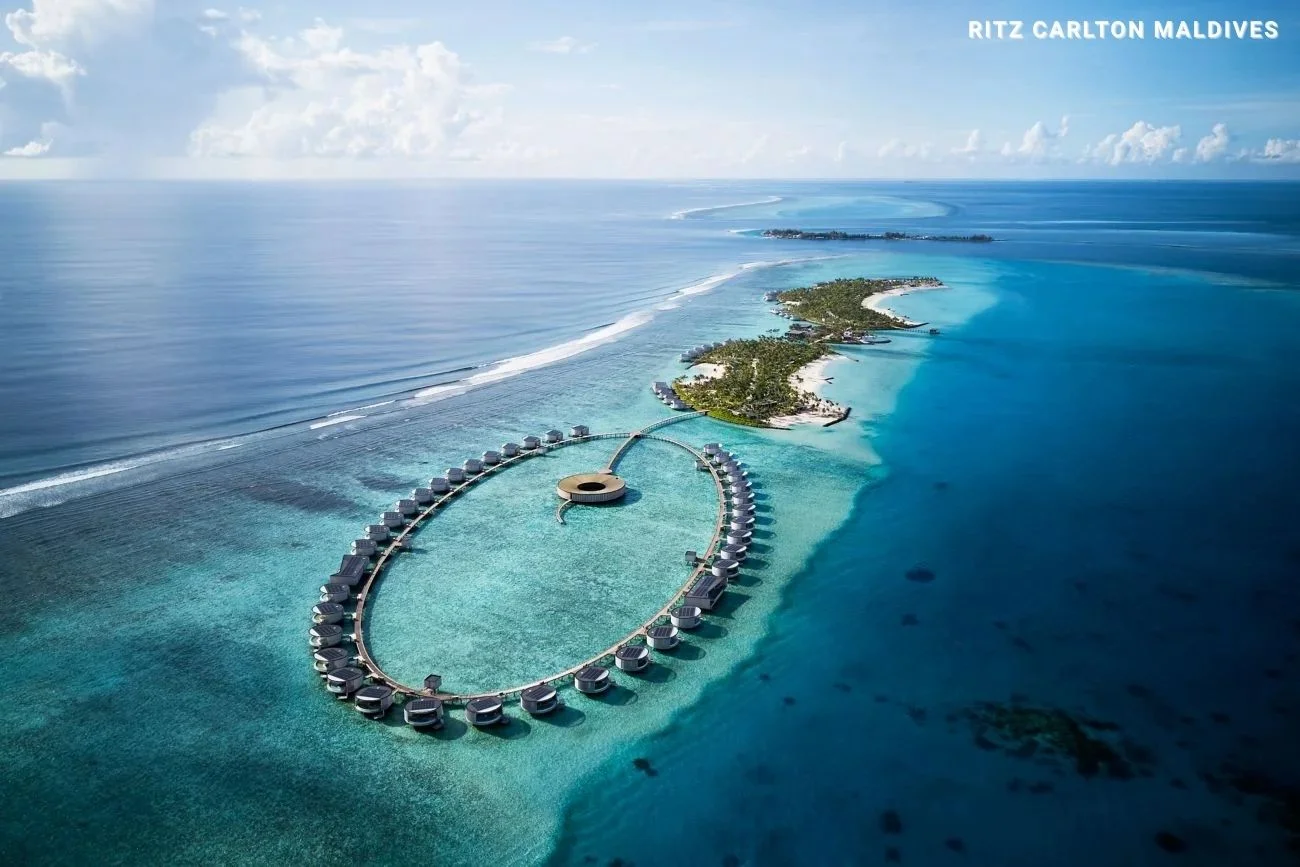
Escape to the Maldives—a breathtaking archipelago where ivory sands meet a gradient of sapphire waters. Known globally as the pinnacle of “barefoot luxury,” this destination is a dreamscape of overwater bungalows, vibrant coral reefs, and tranquil lagoons.
Whether you are a honeymooner seeking seclusion, a diver chasing whale sharks, or a traveler looking for a serene disconnect, the Maldives offers a slice of paradise for every pace.
Understanding the Archipelago
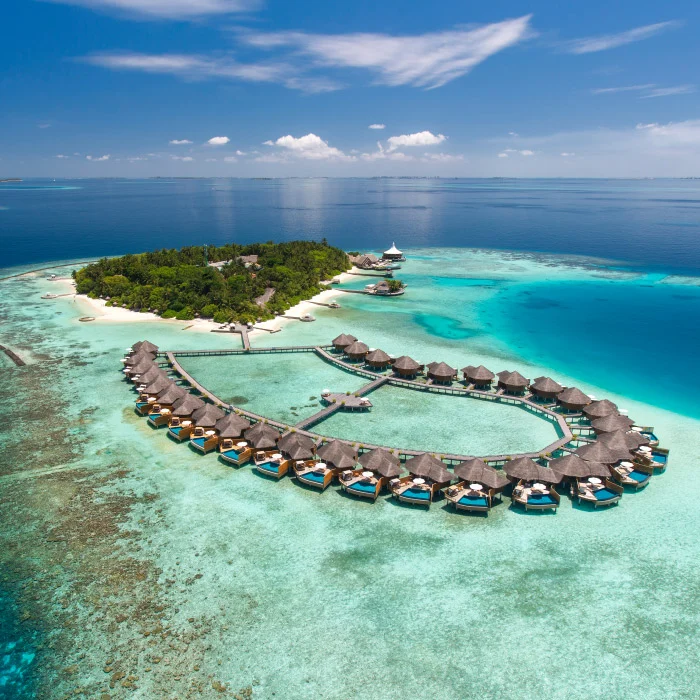
The Maldives is composed of 26 natural atolls containing over 1,190 islands. However, the experience varies significantly depending on where you drop your bags:
- Private Resort Islands: These are the “one island, one resort” destinations. Expect world-class dining, unrestricted dress codes, and curated luxury.
- Local Guesthouses: Since 2009, travelers can stay on inhabited islands (like Maafushi or Dhigurah). This is perfect for those seeking an authentic glimpse into Maldivian culture at a more accessible price point.
Essential Logistics & Travel Tips
Navigating a nation that is 99% water requires a bit of foresight. Here is what you need to know before you touch down at Velana International Airport (MLE):
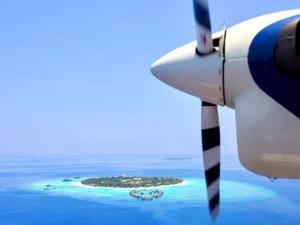
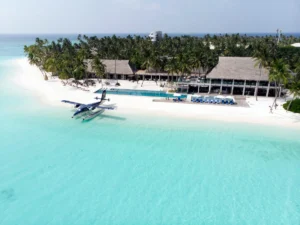
- The “Seaplane” Factor: Most high-end resorts require a seaplane transfer. These only fly during daylight hours, so time your international arrival accordingly to avoid an overnight stay in Hulhumalé.
- Currency & Costs: On resort islands, everything is billed to your room in USD. On local islands, the Maldivian Rufiyaa (MVR) is used, though USD is widely accepted.
- Weather Patterns: The dry season (November to April) offers peak sunshine, while the “wet” season (May to October) brings brief tropical showers and the best conditions for surfers and manta ray sightings.
Cultural Etiquette & Local Laws
The Maldives is a proud Islamic nation, and respecting local customs ensures a smooth journey:
- Alcohol: Alcohol is strictly prohibited on local islands and in the capital, Malé. It is only available for consumption within the confines of private tourist resorts.
- Modesty: When visiting inhabited local islands, both men and women should dress modestly (covering shoulders and knees). “Bikini beaches” are specifically designated areas on local islands where swimwear is permitted.
- Environmental Protection: It is illegal to export sand, shells, or coral. The ecosystem is fragile; always use reef-safe sunscreen to protect the very coral that makes this place famous.
Pro Tip: Don’t just stay in your villa! The Maldives boasts some of the world’s most successful coral restoration projects. Many resorts allow you to “adopt” a coral frame and track its growth long after you’ve returned home.
Entry Requirements & Arrival Logistics
Visa on Arrival
- Free 30-day visa for all nationalities
- Required documents:
- Passport valid for at least 6 months
- Confirmed return or onward ticket
- Proof of pre-paid accommodation
IMUGA Traveler Declaration
- Mandatory for all travelers
- Must be submitted within 96 hours before arrival
- Submit online at IMUGA Portal
Staying Connected
- Purchase a local SIM or eSIM at Velana International Airport (VIA)
- Wi-Fi is common in resorts and guesthouses, but spotty on ferries and remote islands
- Download offline maps and ferry apps in advance
Private Resorts vs. Local Islands
Private Resort Islands
- Ideal for: Seclusion, luxury, and all-inclusive experiences
- Perks:
- Alcohol is legally served
- Bikinis allowed on all beaches
- Private transfers and curated excursions
Local Inhabited Islands
- Ideal for: Cultural immersion and budget-friendly travel
- Examples: Maafushi, Thoddoo, Dhigurah
- Important Notes:
- Alcohol is strictly prohibited
- Modest dress required in public (shoulders and knees covered)
- Bikini Beaches are designated areas for swimwear
Getting Around the Islands
Resort Transfers
- Speedboats: For nearby atolls (e.g., North and South Malé)
- Seaplanes: For distant atolls (e.g., Baa, Lhaviyani)
- Seaplanes operate only during daylight hours
- Arranged by the resort
Local Transport
- Public Ferries:
- Cheapest option
- Limited schedules and longer travel times
- Ideal for flexible itineraries
- Speedboat Shuttles:
- Faster, shared or private
- Book in advance
- Domestic Flights:
- Connect major atolls via regional airports
Prohibited Imports
Confiscated on Arrival
| Item | Details |
|---|---|
| Alcohol | Including duty-free and in-flight purchases |
| Pork Products | All forms, including processed foods |
| Narcotics | Zero tolerance, severe penalties |
| Pornographic Material | Includes digital files and sex toys |
| Religious Items | Non-Islamic literature and idols |
| Weapons | Firearms, spear guns, explosives |
| Vaping Products | Generally banned |
| Animals | Dogs and dangerous species prohibited |
Tobacco & Vaping
- No duty-free allowance as of Nov 1, 2024
- Permitted: Up to 200 cigarettes, 25 cigars, or 250g tobacco
- Vaping: Banned
Ramadan Etiquette
During the fasting month, no eating or drinking in public on local islands during daylight.
Environmental Responsibility
- Use reef-safe sunscreen
- Do not touch or step on coral
- Do not collect or export black coral, shells, or turtle products
Best Time to Visit
| Season | Months | Weather | Notes |
|---|---|---|---|
| Peak | Dec–Apr | Dry, sunny | Best for diving/snorkeling, highest prices |
| Shoulder | May, Oct–Nov | Occasional rain | Fewer crowds, good deals |
| Low | Jun–Sep | Wettest months | Ideal for surfers, some travel disruptions |
Must-Do Experiences
- Manta Ray & Whale Shark Encounters: Especially in Baa and South Ari Atolls
- Sandbank Picnics: Private escapes to uninhabited sandbars
- Sunset Fishing: Traditional dhoni boat excursions
- Snorkeling & Diving: Explore vibrant reefs and shipwrecks
- Island Hopping: Combine resort luxury with local authenticity
Final Tips
- Plan transfers carefully, especially for late arrivals
- Respect local customs, especially on inhabited islands
- Pack smart: Modest clothing, waterproof bags, reef-safe sunscreen
- Travel insurance is highly recommended
At Serenisea Travel, we believe in journeys that honor both luxury and local life. Whether you’re drifting above coral gardens or sharing tea with islanders, let us help you navigate the Maldives with grace, insight, and ease.
A Peek at All 26 Atolls of Maldives
Here’s a curated guide to the unique features, experiences, and accommodations across all 26 atolls of the Maldives, offering travelers a deeper dive into the diversity of this Indian Ocean paradise:
Haa Alifu Atoll (Thiladhunmathi Uthuruburi)
(Northern Thiladhunmathi Atoll)
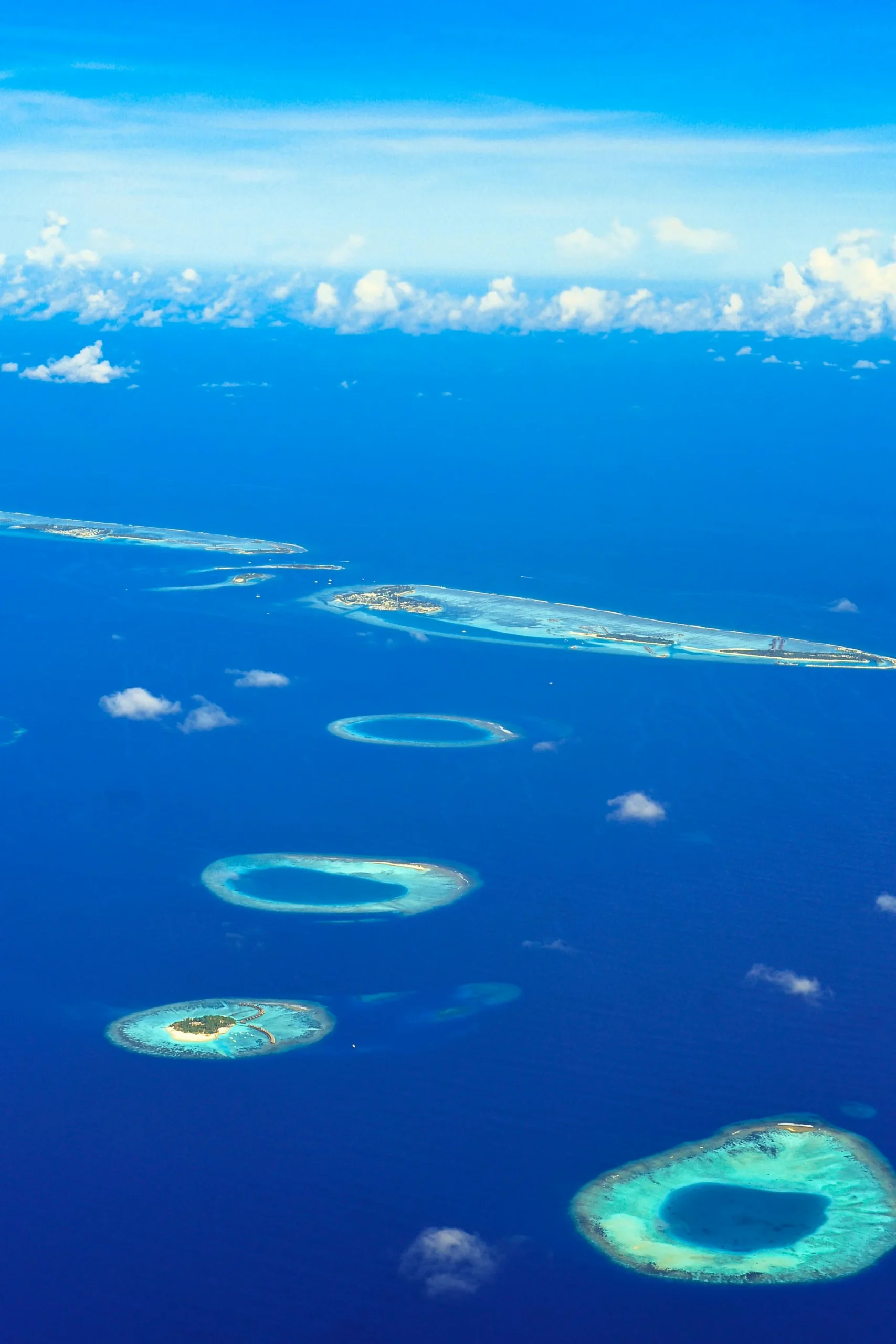
Northern Thiladhunmathi Atoll is the northernmost administrative division of the Maldives, commonly known by its code name Haa Alif Atoll.
Key Characteristics
- Geography: It is the northernmost point of the Maldivian archipelago and the third largest atoll in terms of population and land area.
- Islands: The atoll consists of 42 islands, of which 14 are inhabited. Major islands include:
- Dhidhdhoo: The administrative capital.
- Utheemu: Historically significant as the birthplace of Sultan Mohamed Thakurufaanu, who fought the Portuguese in the 16th century.
- Thuraakunu: The northernmost inhabited island of the Maldives.
- Tourism: It is known for its “hidden paradise” feel due to limited resort development compared to central atolls. Currently, it hosts luxury resorts like Hideaway Beach Resort & Spa.
- Culture & History: It has a rich history dating back over 2,000 years, featuring ancient mosques and the famous Utheemu Ganduvaru palace.
- Feature: Northernmost atoll with untouched reefs.
- Experience: Local island-hopping and cultural immersion.
- Accommodation
- JA Manafaru – luxury villas with private pools.
- Hideaway Beach Resort & Spa.
Haa Dhaalu Atoll
(Thiladhunmathi Dhekun’uburi)
Haa Dhaalu Atoll, also known as Southern Thiladhunmathi, is a pristine and less developed region in the northern Maldives, approximately 280 kilometers north of Malé. It is known for its authentic Maldivian culture, untouched coral reefs, and tranquil atmosphere.
Key Islands and Access
The atoll has 38 islands, 17 of which are inhabited.
- Hanimaadhoo is a key entry point, home to the Hanimaadhoo International Airport (HAQ), which handles domestic and limited international flights from places like India and Sri Lanka.
- Kulhudhuffushi is the capital and main hub of the atoll, known for its vibrant community and traditional crafts such as lacquer work and woven palm leaf products.
- Vaikaradhoo Island is a place of archaeological significance, featuring ancient Buddhist ruins.
To reach Haa Dhaalu Atoll, you typically fly into Velana International Airport (MLE) in Malé, then take a domestic flight (approx. 50 minutes) to Hanimaadhoo International Airport or Kulhudhuffushi Airport, followed by a speedboat transfer to your final island or resort.
Attractions and Activities
- Diving and Snorkeling: The atoll is renowned for its rich marine biodiversity, vibrant coral reefs, and a variety of dive sites.
- Manta Point: A seasonal cleaning station where manta rays gather from August to November.
- Shark Thila: A drift dive channel known for frequent sightings of gray reef and white tip reef sharks.
- Fushi Kandu: A site with varied underwater landscapes including reefs, drop-offs, and caves.
- The Shipyard: A popular diving location featuring two submerged shipwrecks.
- Cultural Immersion: Experience the traditional Maldivian way of life by visiting local islands, exploring fishing villages, and observing local artisans at work.
- Water Sports: Various water activities are available, including kayaking, water skiing, wakeboarding, and traditional night fishing.
Recommended Resorts and Guesthouses
Accommodations in the atoll range from authentic guesthouses to luxury resorts.
- Soneva Secret: An ultra-exclusive luxury resort with only 14 villas, known for unparalleled privacy and world-class snorkeling.
- The Barefoot Eco Hotel & Villas: An eco-friendly option with positive ratings, offering a blend of resort amenities and natural surroundings.
- Hondaafushi Island Resort: A large resort offering numerous spa and leisure activities.
- Mi Lugar Retreat and Spa / Fanhaa Guest House: Well-rated options for those seeking a more intimate and authentic guesthouse experience.
Discover Shaviyani Atoll
The “Miladhunmadulu” Hidden Gem
Often referred to as the Miladhunmadulu North Atoll, Shaviyani Atoll is a pristine sanctuary for travelers seeking the “authentic Maldives.” Located in the northern reaches of the archipelago, this atoll balances untouched local culture with some of the most innovative luxury resorts in the Indian Ocean.
Why Visit Shaviyani Atoll?
While many travelers flock to the central atolls, Shaviyani offers a sense of seclusion and raw natural beauty that is becoming increasingly rare.
- Pristine Marine Life: The atoll is famous for its large lagoons and vibrant coral reefs. It is a hotspot for spotting green sea turtles and guitar sharks.
- Cultural Heritage: Visit the island of Kanditheemu, home to the oldest known sample of the Thaana script (the Maldivian writing system), dating back over 400 years.
- World-Class Diving: With fewer dive boats than Male’ or Ari Atoll, you’ll often have the spectacular thilas (underwater mountains) and channels all to yourself.
Top Experiences in Shaviyani
| Activity | Why You’ll Love It |
|---|---|
| Coral Regeneration | Shaviyani is home to the Maldives’ first semi-submerged art gallery and coral restoration project. |
| Dolphin Watching | The wide channels between islands are natural highways for playful spinner dolphins. |
| Island Hopping | Explore local fishing villages to experience authentic Maldivian hospitality and cuisine. |
The Top 5 Stays in Shaviyani Atoll (2026 Edition)
Shaviyani Atoll is home to some of the most exclusive and spacious resorts in the Maldives. Because the islands here are larger and further apart, you get more “beach per person” than almost anywhere else.
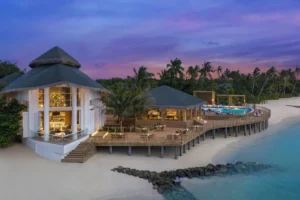
2. JW Marriott Maldives Resort & Spa
Best for: Multi-Generational Families & Foodies
- The Vibe: Modern luxury with architecture inspired by traditional Dhoni boats and heron birds.
- Unique Feature: The Little Griffins Kids Club, featuring a 43-foot pirate ship and 100+ weekly activities, making it a top-tier choice for families.
- Highlight: A massive selection of 5 restaurants and 3 bars, including “Riha,” a hidden gem that offers a private 8-course fusion menu under the stars.
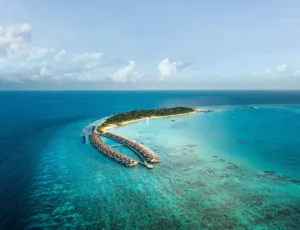
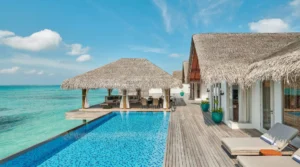
3. Sirru Fen Fushi Private Lagoon Resort
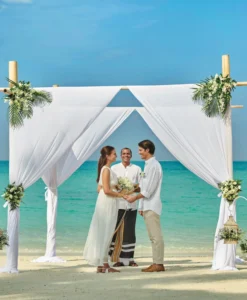
Best for: Romance & Total Seclusion
- The Vibe: Intimate, private, and deeply connected to the marine environment.
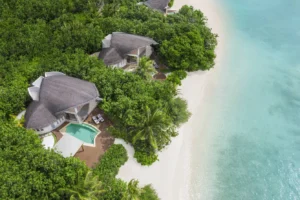
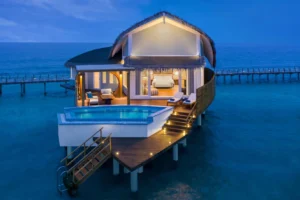
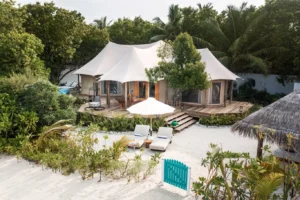
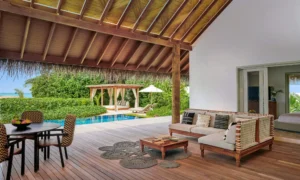
- Unique Feature: Every single villa—whether on the beach, in the jungle, or over the water—comes with its own private pool and dedicated butler (Thakuru).
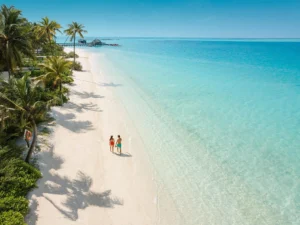
- Highlight: The island is surrounded by a massive 600-hectare lagoon, offering incredible space for snorkeling right from your villa deck.
4. Handhuvaru Maldives (Milandhoo)
Best for: Authentic Local Experiences & Budget-Friendly Luxury
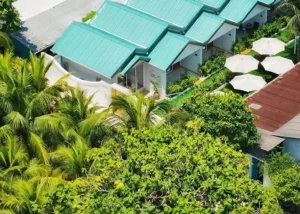
- The Vibe: A high-end guesthouse/boutique hotel experience on a vibrant local island.
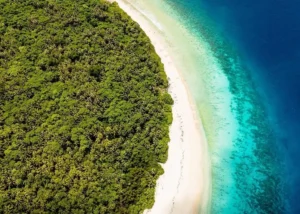
- Unique Feature: Offers a bridge between luxury and the true Maldivian lifestyle. You can cycle through palm forests or join local fishermen.
- Highlight: Known for exceptional hospitality and personalized excursions to nearby uninhabited islands for private snorkeling sessions.
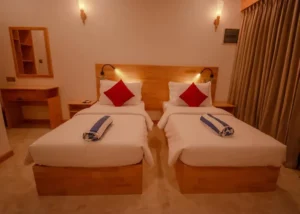
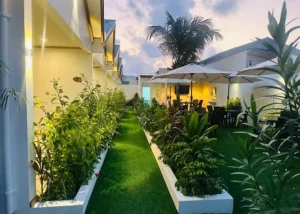
5. Gaskara Guesthouse
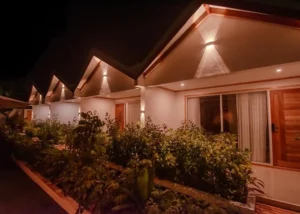
Best for: Solo Travelers & Adventure Seekers
- The Vibe: Relaxed, welcoming, and focused on the natural beauty of the atoll.
- Unique Feature: Provides easy access to Shaviyani’s most famous dive sites without the “resort price tag.”
- Highlight: Perfect for travelers who want to spend their days in the water and their nights enjoying authentic Maldivian home-cooked meals.
Comparison at a Glance
| Resort / Stay | Best Suited For | Key Luxury |
|---|---|---|
| JW Marriott | Families / Foodies | Award-winning Kids Club |
| Sirru Fen Fushi Lagoon | Honeymooners | 100% Private Pool Villas |
| Handhuvaru Maldives | Cultural Seekers | Local Island Immersion |
| Gaskara Guesthouse | Divers / Budget | Direct Access to Rare Dive Sites |
Travel Tips for Your Trip
- Getting There: Shaviyani is typically reached via a 55-minute seaplane journey from Velana International Airport (MLE), offering breathtaking aerial views of the atoll formations.
- Best Time to Visit: For the clearest waters and sunniest skies, plan your trip during the dry season between November and April.
- Eco-Conscious Travel: Many resorts in this atoll lead the way in sustainability. Look for properties with “reef-safe” initiatives to help protect this fragile ecosystem.
Traveler’s Note: Shaviyani is perfect for honeymooners and families alike who want a quieter, more intimate connection with nature without sacrificing 5-star comfort.
Discover Noonu Atoll
The Untouched Jewel of Northern Maldives
For travelers who crave the perfect blend of high-end seclusion and authentic island heritage, Noonu Atoll (also known as Southern Miladhunmadulu Atoll) is the ultimate Maldivian escape. Located approximately 180km north of Malé, this atoll is a sanctuary of pristine beauty, home to some of the world’s most iconic ultra-luxury resorts and a marine ecosystem that remains largely undisturbed by mass tourism.
Why Choose Noonu Atoll for Your Next Vacation?
Noonu Atoll stands out for its “barefoot luxury” philosophy and its incredible density of marine life. Whether you are a honeymooner looking for a private overwater villa or a family seeking adventure, Noonu offers a curated experience unlike any other atoll.
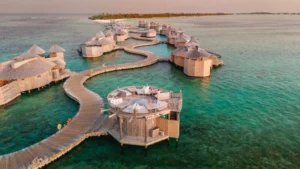
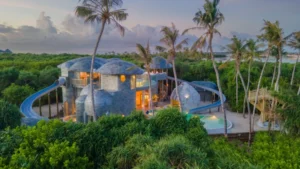
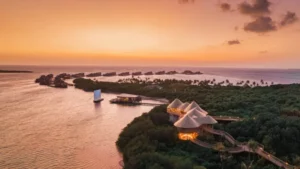
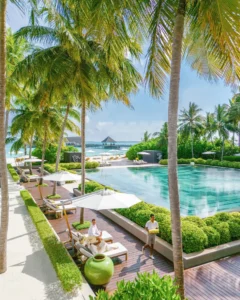
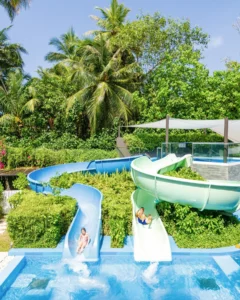
- World-Class Luxury Resorts: Noonu is home to legendary names like Soneva Jani—famous for its overwater villas with private slides—as well as Cheval Blanc Randheli, Velaa Private Island, and Siyam World.
- Pristine Marine Biodiversity: The atoll boasts a high concentration of spinner dolphins, reef sharks, and sea turtles. Dive sites like Christmas Tree Rock and Orimas Thila are world-renowned for their vibrant soft corals and “shark point” sightings.
- Authentic Cultural Heritage: Beyond the resorts, islands like Landhoo offer a glimpse into the Maldives’ pre-Islamic history with ancient Buddhist ruins (Hawittas), while the capital, Manadhoo, showcases traditional coral-stone architecture.
- Exclusive Diving & Snorkeling: With 71 islands (only 13 inhabited), the reefs here are among the least crowded in the country, offering a private underwater playground for snorkelers and scuba divers.
Top Things to Do in Noonu Atoll
| Activity | Description |
|---|---|
| Manta Ray Spotting | Visit cleaning stations during the peak season (December–April) for intimate encounters. |
| Sunset Dolphin Cruises | Watch hundreds of spinner dolphins play in the wake of a traditional Maldivian dhoni. |
| Stargazing | With minimal light pollution, enjoy professional observatories at resorts like Soneva Jani. |
| Sandbank Picnics | Spend a day on a completely deserted strip of white sand surrounded by turquoise lagoons. |
| Island Hopping | Explore local life on Velidhoo or Holhudhoo to learn traditional boat-building (dhoni) crafts. |
Travel Tips for Your Trip
- Best Time to Visit: The dry season from November to April offers the calmest seas and best visibility for diving.
- Getting There: Most travelers arrive via a scenic 45-minute seaplane flight from Velana International Airport (Malé). Alternatively, domestic flights to Maafaru International Airport provide a convenient gateway to the atoll’s luxury properties.
- Sustainability: Noonu Atoll is a leader in eco-tourism. Encourage your clients to choose resorts with coral restoration programs and plastic-free initiatives.
Traveler Pro-Tip: Don’t miss a visit to the “Maamiskithu Vevu” on Manadhoo—an ancient sandstone bathing tank adorned with Arabic calligraphy that dates back centuries.
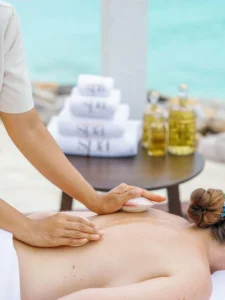
Moments of Magic at Soneva Jani

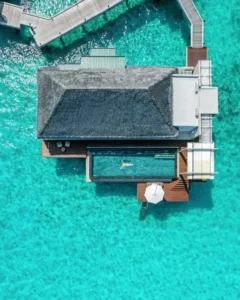
Your Window Into Cheval Blanc Randheli
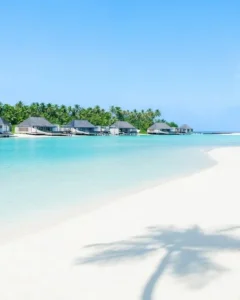
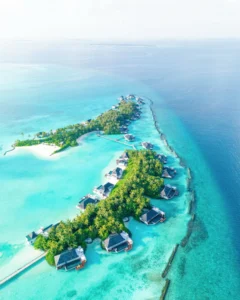
Vela Private Island: A Visual Escape